
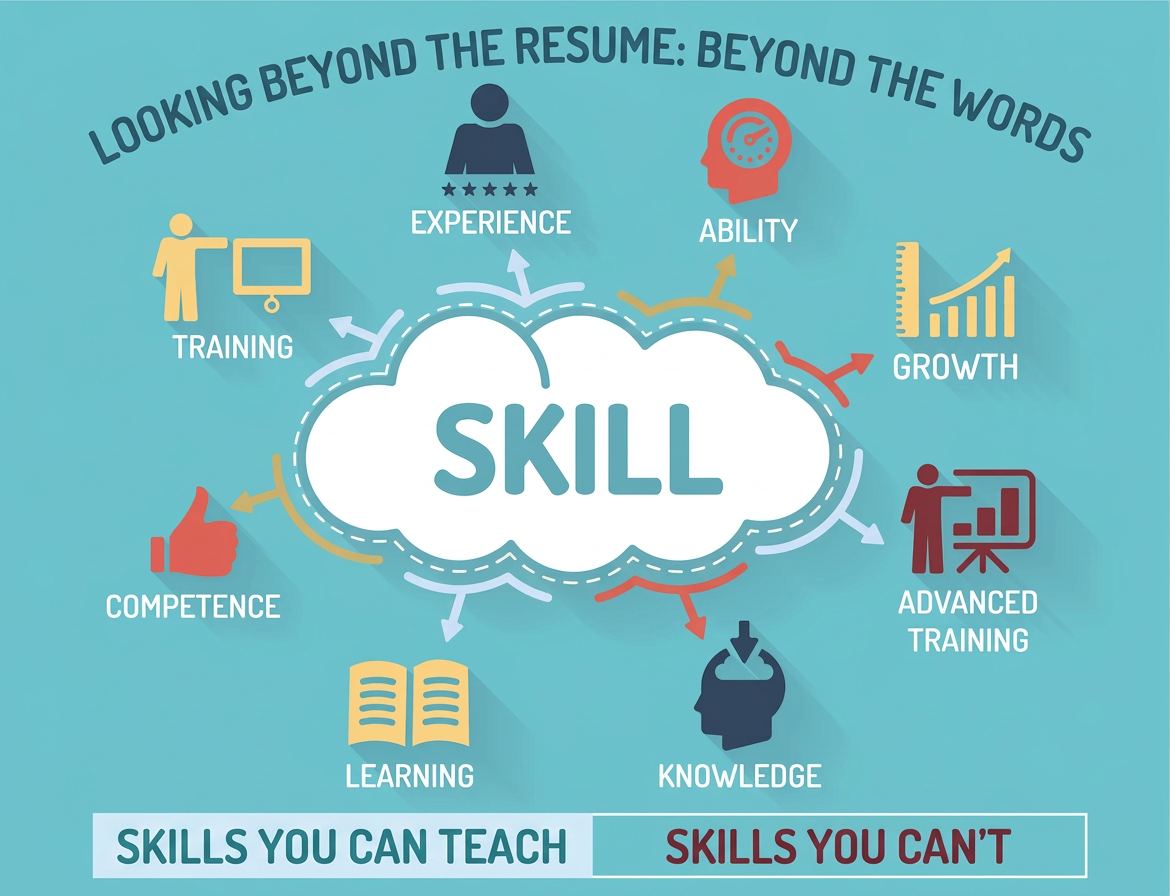
When hiring employees, experience and technical qualifications are important, but I do not believe they tell the entire story of what someone can bring to an organization. Personally, I would rather hire someone who may not know everything yet but demonstrates strong character, the right attitude, a willingness to learn, and potential for growth than someone with impressive technical qualifications who lacks those qualities. Some skills can be taught through training and experience, while qualities connected to a person’s character and personality can be much more difficult to develop.
Rather than limiting recruiting to people who already perfectly match a traditional job profile, Herrenkohl encourages employers to consider overlooked talent pools (Herrenkohl, 2010). For example, the chapter discusses teachers with strong communication and people skills, college students who can be developed through internships, and individuals whose previous jobs have provided transferable abilities. I think this is important because an A-player may not always look like one on paper at first.
I can relate to this personally as a college graduate entering the workforce. Job searching can be difficult when employers request several years of experience for positions, even when a candidate may have significant potential for growth. A lack of years in a particular position does not necessarily mean someone lacks the ability to learn, contribute, and eventually excel in that position. Current hiring trends appear to recognize this distinction. The National Association of Colleges and Employers reports that nearly 70% of employers responding to its Job Outlook 2026 survey use skills-based hiring. Employers also emphasized students’ ability to connect skills developed through coursework and extracurricular and experiential learning to the workplace (NACE, 2025).
Research also demonstrates why characteristics beyond technical qualifications deserve consideration. A meta-analysis found that conscientiousness was consistently related to job-performance criteria across the occupational groups they studied (Barrick & Mount’s, 1991). Openness to experience was also associated with training proficiency. These findings reinforce the idea that characteristics related to how someone approaches work and learning can matter alongside existing technical abilities.
Ultimately, I believe employers should consider not only what applicants have already accomplished, but also what they have the potential to accomplish. Experience can be gained, procedures can be taught, and technical skills can be developed. When employers recognize transferable skills, character, willingness to learn, and potential, they may discover an A-player they otherwise would have overlooked.
References
Barrick, M. R., & Mount, M. K. (1991). The Big Five personality dimensions and job performance: A meta-analysis. Personnel Psychology, 44(1), 1–26. https://doi.org/10.1111/j.1744-6570.1991.tb00688.x?utm_source=chatgpt.com
Herrenkohl, E. (2010). How to hire A-players: Finding the top people for your team—even if you don’t have a recruiting department. John Wiley & Sons.
National Association of Colleges and Employers. (2025). Job outlook 2026. https://www.naceweb.org/research/reports/job-outlook/2026?utm_source=chatgpt.com


I really liked your point about employers looking at overlooked talent pools rather than only searching for someone who perfectly fits the job description. I think employers can sometimes become so focused on years of experience or specific qualifications that they overlook someone who has transferable skills that could make them successful in the position. Your example about college graduates especially stood out to me because someone may not have several years of professional experience yet, but they could have developed communication, leadership, time management, and problem-solving skills through school, internships, or other experiences.
I also think willingness to learn is extremely important when considering someone’s potential. An applicant who already has the technical skills may seem like the easier choice, but someone who is adaptable, motivated, and willing to accept feedback could potentially become the stronger employee over time. It makes me wonder how employers can improve their hiring process to identify these qualities when they may not be obvious from a resume.
LikeLike