
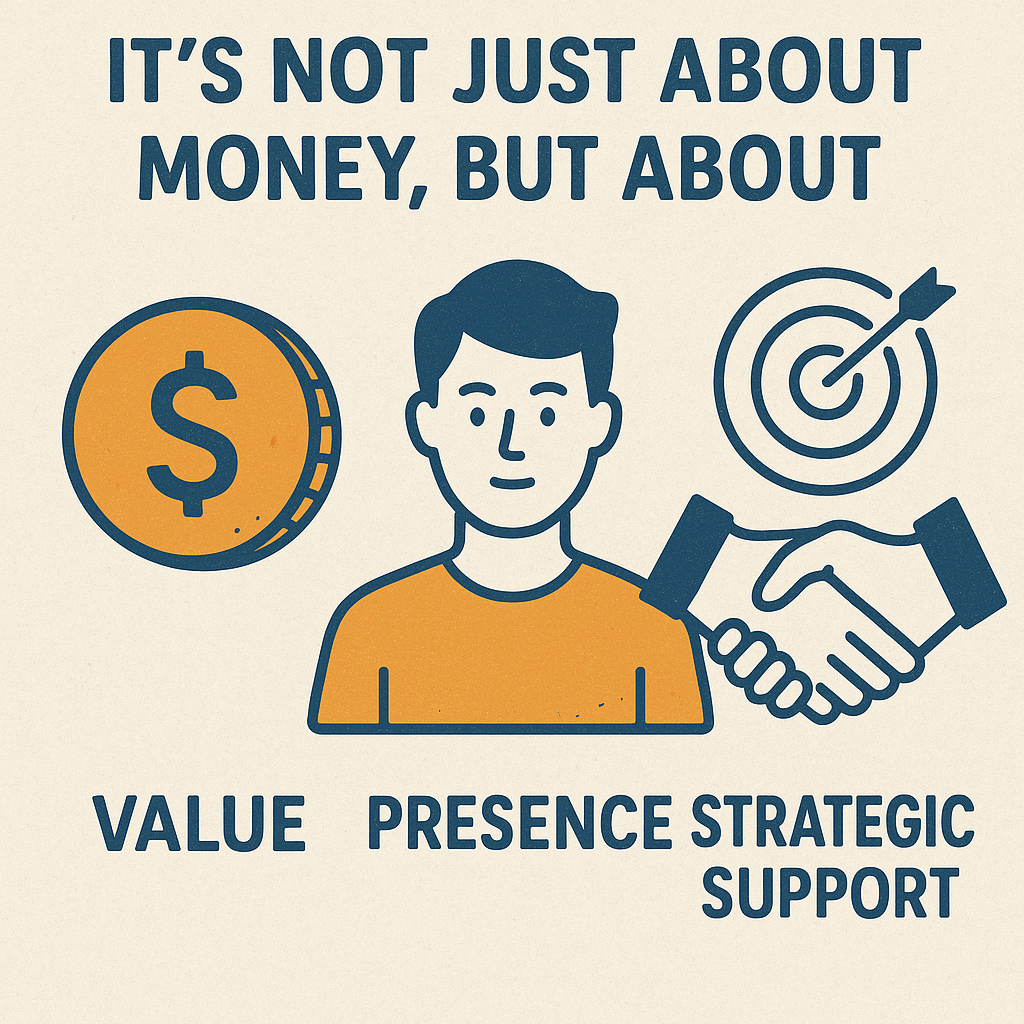
Chapters 4 through 7 of ANGEL by Jason Calacanis continued to inspire and challenge me as an aspiring entrepreneur. In Chapter 4, “Is Angel Investing for You?” the author breaks down what it really takes to be a successful angel investor—money, time, network, and expertise. While you don’t have to have all four, the most effective angels have a combination of them. He says the best angels can (1) write a check, (2) jam out with founders over important issues, (3) provide meaningful introductions to customers and investors, and (4) offer advice that saves founders time, money, and mistakes. This made me think more about how it’s not just about money, but about value, presence, and strategic support.
He also talks about dealing with a wide range of personalities—some brilliant and calculating, others delusional and difficult. And you have to be okay with that. If you’re not comfortable listening to people go on and on about how they’re going to change the world—even if it sounds outlandish at first—then angel investing probably isn’t for you. He talks about “wild cards”—founders who might come off as delusional, narcissistic, or overconfident in the beginning, but who later turn out to be visionaries.That stood out to me because it made me reflect on how people may perceive early entrepreneurs like myself. I often wonder if that’s how people see me now—as a “baby entrepreneur”. I have these big dreams of creating real solutions for real problems in my community and beyond, but since nothing’s launched yet, I sometimes wonder if others see me as a “wild card” or even a little delusional. But like Jason said, those same people are later called “visionaries” once they make it. So I’m holding on to that. I might be seen as overly optimistic now, but I know what I’m building has value—and when it all comes together, the narrative will change.
In Chapter 5, “Do You Need to Be in Silicon Valley to Be a Great Angel Investor?” the answer was simply “yes,” and that simplicity made a bold point. Then Chapter 6, “What’s So Special About Silicon Valley?” builds on that by painting the Bay Area as the center of innovation—not just for startups, but for media, transportation, health, advertising, and more. He says, “The Bay Area is the center of the world—it’s not even up for discussion.” When I read that, it hit me just how influential that small part of Northern California really is. 30% of all venture capital money in the U.S. flows into the Bay Area—more than Boston, New York, and Los Angeles combined. That’s kind of crazy to think about. It definitely shows the power of putting yourself in the right environment. The author talks about how some not-so-smart people got rich quickly in the Bay, while many intelligent people struggled in other cities.
That made me think a lot. I’ve always wanted to travel and explore opportunities beyond North Carolina. Reading this felt like confirmation that, as someone interested in tech and app development, I need to expand my reach and network—especially if I want to eventually connect with angel investors who can help me grow. Location really can impact your access to resources and exposure. That said, I also believe in the power of starting small and growing sustainably. Even if I’m not in Silicon Valley yet, I can still make a major impact here in Greensboro, North Carolina.
I want my app to be something that creates real change locally before I expand globally. It’s about sustainability just as much as scalability. Yes, I want to build something that one day reaches people all around the world, but if I can help even just one person here in my community, that’s already a success in my eyes. The author said he’d rather see a founder fail at a big goal than succeed at a small one. But to me, it depends on what “small” means. Making a difference in even one life is big. My goal is to serve my community well and build something meaningful first—then scale when the time is right.
Finally, Chapter 7, “Startup Funding Rounds Explained,” lays out the different types of startup funding: sweat equity, bootstrapping, friends and family, incubators, angel/seed funding, bridge rounds, and then Series A through F. One point he emphasized is how investors want to see that you’ve already invested in yourself. That means time, effort, passion, and yes, your own money. They want to know that you’re serious about your business and that you’re not just good at asking for money. They also want to see that you’re not disconnected from your product or your customers. That made me reflect on how I’m approaching my own venture. I’m currently developing a demo of my app and working hard behind the scenes to gather data, refine my ideas, and stay connected to my “why.” I want to be capital-efficient and intentional. I don’t want to take advantage of friends and family either—I want to show that I’ve done the work, that I’m prepared, and that I know where I’m going. Before anyone else invests in me, I want them to see how much I’ve already invested in myself.
These chapters reminded me that while success in the startup world may seem far away at times, the right mindset, consistency, and faith will carry me there. I’m learning to be the one who believes first, so that others will eventually follow. And with that belief, comes action—strategic, focused, and persistent action that will make my vision real.
Take a look at this article:
“Financing the Next Silicon Valley” by Darian M. Ibrahim. Published in the 2010 Washington University Law Review.
The article explores why efforts to replicate Silicon Valley’s high-tech success often falter in other regions. The author argues that a significant barrier is the lack of local financing for startups, which prompts talented entrepreneurs to relocate to established tech hubs like Silicon Valley.
The article compares three primary sources of entrepreneurial finance:
- Private Venture Capital: While influential, it’s typically concentrated in established tech regions.
- State-Sponsored Venture Capital: Government-led initiatives often face challenges in effectively identifying and nurturing high-potential startups.
- Angel Investor Groups: Ibrahim highlights these as particularly advantageous for non-tech regions. Angel groups not only provide capital but also mentorship and networking opportunities, making them well-suited to support local innovation.
Furthermore, the article examines how securities laws might impede the optimal functioning of angel groups, suggesting that regulatory reforms could enhance their effectiveness in fostering regional entrepreneurial ecosystems.
In essence, the author advocates for strengthening local angel investment networks and addressing legal barriers to create fertile grounds for innovation outside traditional tech centers.

 EmpowerMe Life
Hi Aamiya,
Thank you for such a powerful and thoughtful reflection. As someone who works in a grants department that applies for funding to support institutional initiatives, I found your insights deeply resonant—especially around the themes of strategic investment, early belief, and building something meaningful from the ground up.
Your reflections on Chapter 4 really hit home. In our world, securing grant funding isn’t just about meeting eligibility requirements—it’s about telling a compelling story, demonstrating value, and showing that you’ve already done the groundwork. Much like angel investing, grantmaking is about more than just money; funders want to see commitment, capacity, and a clear understanding of the problem you’re solving. Your point about investing in yourself first mirrors what we often have to communicate in our proposals: that we’re not asking for money to start caring—we’re seeking support to scale something we’re already dedicated to.
Your discussion of geography in Chapters 5 and 6 also made me think about how place influences opportunity. Silicon Valley may be the epicenter of startup capital, but in the grants world, we’re seeing more emphasis on equity in regional innovation. Funders are increasingly interested in lifting up under-resourced areas and supporting entrepreneurs and institutions rooted in their communities. Your commitment to Greensboro and the idea of making a local impact before scaling globally is incredibly smart—and honestly, funders love that. It shows a clear sense of purpose and a realistic, sustainable trajectory.
I also appreciated your takeaway from Chapter 7 about capital efficiency and proving value early. That’s very much in line with the grant proposals we write—we’re often making the case that a relatively small investment now will yield measurable impact and long-term outcomes. Your approach to building a demo, gathering data, and staying connected to your “why” shows the kind of readiness and intentionality that both investors and funders respect.
LikeLike
Hey Freddy!
I really appreciate how you drew such meaningful parallels between grantmaking and angel investing. Your point about funders wanting to see that we’re not just starting to care—but already doing the work and seeking support to scale—is so powerful and exactly the mindset I’ve been trying to adopt. It’s encouraging to hear that approach resonates in both entrepreneurial and institutional funding spaces.
I also loved what you shared about regional equity in innovation. It’s refreshing (and motivating!) to know that funders are becoming more intentional about supporting locally-rooted efforts and under-resourced areas. Your insight reinforced for me that building where I am—in Greensboro—with purpose and impact in mind can be a strength, not a limitation. That encouragement really fuels my motivation to continue grounding my work in community.
Thank you again for sharing your perspective. It’s exciting to see the connections between our fields and how we’re both working toward sustainable change, one intentional step at a time!
LikeLike
I want to start by saying how I love the structure and layout of your blog and reflections. I have been struggling to focus on one chapter each week, your layout provides a great way to tie the chapters back to each other.
Your topic on the angel investors needing to be prepared to encounter many personality types caught my attention. You mentioned being a baby entrepreneur and how that may be perceived by Angel investors, but I think you would be an ideal client for an Angel investor. You mentioned the strategic partnership between the founder and the angel investor and how hands-on angels are. If an angel investor took the time to see your business plan and the work you put into it, I don’t think they would walk away seeing you as a wild card. If anything, they would see you as a dreamer with a great idea.
With all that being said, I’m curious what your ideal angel investor and founder relationship would look like. Would you like a mentor, a bank, someone who wants their input included, etc. Founders can always say no to investors that aren’t their cup of tea.
LikeLike
Hey Meaghan!
Thank you so much for your kind words about my blog layout—that truly means a lot! I’ve found that connecting the chapters back to each other has helped me stay organized and grounded, so I’m really glad that approach resonated with you too.
Your encouragement about angel investors and how they might perceive me was so uplifting. It’s easy to second-guess yourself as a “baby entrepreneur,” especially when navigating spaces filled with experienced voices. Hearing that you see potential in the vision and groundwork I’m laying gave me a real boost—thank you!
As for your question about the ideal angel investor/founder relationship, that got me to thinking and I appreciate you for asking that.
I think I’d love a balance between mentorship and strategic partnership—someone who believes in the mission and offers guidance, but also respects my (the founder’s) voice and vision. I’d want an angel who sees the heart behind the idea, not just the market potential. Someone who’s invested in the long game, not just the exit.
I appreciate you bringing that up because it’s a good reminder that, just like investors are selective with founders, we as founders have the right to be selective too. It’s about alignment, not just access. Thanks again for your thoughtful comment Meaghan!
LikeLike
Hi Aamiya,
I think you nailed several key traits of successful angel investors, but I do think one qualifier deserves a bit more attention: the size of the check. You mention the ability to write a check as a core requirement, but how big of a check are we talking? I feel confident in my ability to meet all four qualifiers you listed, but my investment capacity would be relatively modest, and certainly nowhere near the six-figure deals we see on Shark Tank. Does the book give any guidance on what kind of financial commitment is typical or expected for angel investors?
I also want to gently push back on the idea that one needs to be in Silicon Valley to be a great angel investor. While it’s true that 30% of all venture capital flows through that region, it also means 70% does not. Like Freddy mentioned in her comment, many “investors” in the grant and nonprofit world prioritize local, under-resourced efforts because those are often the projects that have the deepest community impact. These organizations are embedded in the fabric of the issues they are trying to solve, which is something you can’t always buy with money or scale from afar.
And while Silicon Valley funding may offer more capital and resources from the start, I wonder what the trade-offs are. Could there be risks like unsustainable growth, dilution of ownership, loss of autonomy, or increased bureaucracy? It also makes me wonder who tends to be more satisfied in the long run: founders who secure local, mission-aligned support or those who scale quickly with big investors?
What do you think?
LikeLike
Hey Samantha!
I really appreciate your pushback—it made me reconsider and deepen my own understanding. You raise a great point about the size of the check, and the book actually does address this! It mentions that the minimum investment required by most startups is typically around $25,000 or $50,000, but being an advisor is another way to “cut a check” by investing not necessarily money, but your time, skills, and reputation. By adding your personal brand equity to a startup’s often non-existent brand equity, you can still make a powerful impact (pg. 67–68).
I actually agree with you here and thank you for helping me see it in a new light—especially by focusing on what Freddy said about grants and securing local, mission-aligned support. That really helped reframe the idea of “investment” for me, not just as financial but also as relational and values-based. I think you’re right to point out the trade-offs of going the big VC route—while the capital is appealing, it could indeed risk authenticity, autonomy, and bring on increased bureaucracy.
In the long run, I’d imagine founders who stay true to their mission and maintain local roots may experience more satisfaction and sustainable growth—especially if the goal is deep community impact. Thanks again for sharing your insight—it really added depth to the conversation.
LikeLike
Aamiya, your reflections just keep getting stronger. This one really spoke to the soul of entrepreneurship—especially your emphasis on value, presence, and strategic support over just money. I deeply admire how you framed the idea of being perceived as a “wild card” not as a weakness but as a sign that you’re on the visionary path. That’s the kind of mindset that separates dreamers from doers—and it’s clear you’re both.
Your perspective on local impact versus global reach is also powerful. The way you articulated your commitment to Greensboro, while still keeping an eye on future scalability, shows a level of intentionality and heart that many overlook. That’s what makes movements sustainable—and your approach is something both funders and future partners will absolutely respect.
You’re not just documenting your entrepreneurial journey—you’re leading by example. Keep trusting your vision and investing in your mission the way you already are. People will see that passion and precision—and they’ll want to be part of what you’re building.
Warm regards,
Brent Parker
Owner – Resilience Repurposed LLC
Graduate Student – WCU (M.E.I.L.E. Program)
https://blog.resiliencerepurposed.com
LikeLike
Aamiya,
Your statement about wanting your app to create real change locally before expanding hit home with me. In my work as a health educator, we work to help make positive change happen within individuals and communities. One of our grants we work under is working with prevention and cessation of tobacco products, including vaping. Instead of going at this with the approach of getting the entire state of Kentucky to become smoke-free (while that may be the ultimate goal), our grantors stress the importance of change at the local level, first. Change at the individual level can lead to change at the local level and then change at the local level amongst several communities can then lead to change at the county level. Change amongst several counties can then eventually lead to change at the state level. So, I love your thoughts on creating real change at the local level, first. This gives you the opportunity to conquer on a smaller level and then go up from there. Small change can lead to big change.
YESSSSSSSSSSSS! I absolutely agree with making a difference in just one person’s life/helping just one person as being worth it! I taught over 330 high school students throughout this past school year (I usually teach middle and elementary, so I was out of my comfort zone) and not all of them jived with the curriculum I was teaching. That is expected. Freshman have their own agenda anyway….. but, the most beautiful moment was when I saw students that were more on the non-communicative side at the beginning of the year, come out of their shell toward the end of the year! Whereas they might not participate in the beginning, but as the year went on they opened up, shined with more confidence, and presented in front of the class with little to no hesitation. One student in particular just got my heart going from non-verbal at the beginning of the year to verbal and playing dual roles in skits in the second semester. So, yes! Even one life changed is worth it!
I love how you wrapped up your reflection with “learning to be the one who believes first, so that others will eventually follow.” What a great way to describe what I would call, a successful entrepreneur!
LikeLike