ANGEL 18-20: Knowing Your Why -The People Behind The Business

Chapters 18 through 20 of Angel by Jason Calacanis were some of the most insightful for me as an entrepreneur. These chapters really dig into the importance of discernment, intentional listening, and being able to tell the difference between a passionate founder and a persuasive fraud. I appreciated how these chapters shifted the focus from flashy ideas to what really matters: the people behind them.

Chapter 18 introduced four foundational questions to ask every founder: Why this business? How committed are you? What are your chances of succeeding? What does winning look like? These questions seem simple, but they’re incredibly revealing. As someone who’s building a mission-driven business, I reflect on how I’d answer these myself—and how important it is that I can communicate those answers clearly. This chapter confirms that the “why” behind a venture is just as important as the product or service. Investors want to know you’re not just chasing a trend, but that you’re deeply committed to solving a real problem.

In Chapter 19, Calacanis goes deeper—literally. He emphasizes the importance of asking thoughtful, sometimes personal questions that reveal more about a founder’s character and background. I really connected with this because I believe in building genuine relationships, not just transactional ones. Understanding where someone comes from—what their parents did, how they think about money, what keeps them up at night—can tell you more about their potential than any pitch deck ever could. It made me think about the ways I can better show up in those conversations with authenticity and vulnerability, both as a founder and as a future investor.

Chapter 20 struck a cautionary tone: “Founder or Fraud?” Calacanis dives into the fine line between vision and exaggeration. It’s not always about intentional deceit—sometimes founders believe their own hype without having the data or plan to back it up. That really hit home for me. As someone who’s hopeful and optimistic by nature, I have to remember that good intentions don’t always equal good business. This chapter made me think about how I want to stay grounded in truth and transparency, even when I’m dreaming big. It also gave me a deeper respect for the investors who do their due diligence and ask the hard questions.

Together, these chapters emphasized that the heart of angel investing isn’t just in spotting big hits—it’s in understanding people. And that’s something I want to carry with me as a founder.

ANGEL 14-17: Vision, Resilience, and Leadership

Chapters 14 through 17 of Angel by Jason Calacanis offered practical and powerful insights that go far beyond theory—they walk you through the mindset and behavior of an intentional, sharp angel investor. These chapters emphasized not only how to prepare for pitch meetings, but more importantly, how to evaluate people. As an entrepreneur, these chapters pushed me to think more deeply about how I show up in rooms, how I evaluate opportunities, and how I prepare others to see the value in what I’m building.

In Chapter 14, Calacanis shares some of his best and worst pitch meeting experiences, which helped normalize the process of learning through both success and failure. It’s not just about knowing what to look for—sometimes it’s about knowing what to avoid. The takeaway for me was that volume matters. Seeing a wide range of pitches builds instinct and discernment, and I realized this applies to me as a founder too: the more people I talk to about my business, the better I become at communicating my value clearly and concisely.

Chapter 15 stressed the importance of preparation. Calacanis recommends spending three hours per startup before a pitch, which includes product research, market understanding, and investor background. That level of dedication resonated with me. Whether I’m on the receiving end of an investment pitch or presenting my own vision, preparation is a form of respect—respect for the opportunity, the other person’s time, and the potential impact of the partnership.

Chapter 16 highlighted the importance of presence during pitch meetings. I appreciated how Calacanis talks about putting the phone away, being engaged, and letting the founder lead. It reminded me of how powerful undivided attention can be—something that can make or break trust in those critical first interactions. It also challenged me to be fully present in all meetings, not just as a professional habit but as a way to cultivate deeper relationships.

Chapter 17 was perhaps the most impactful for me: “You don’t pick billion-dollar companies—you pick billion-dollar founders.” That statement stuck with me. As someone who hopes to one day receive investments, it encouraged me to continue developing myself, not just my business model. Investors want vision, resilience, leadership. Those traits matter just as much, if not more, than the idea itself.

These chapters reminded me that angel investing—and entrepreneurship—is not just about metrics and numbers, but about people, preparation, presence, and potential. And that’s a space I want to grow in.

ANGEL 11-13: Mindset, Movement, and Making Strategic Connections

Chapters 11 through 13 of Angel by Jason Calacanis gave me a clearer sense of how someone like me—still building financial strength but deeply committed to learning—can get more involved in the world of angel investing. These chapters aren’t just about writing big checks; they’re about mindset, movement, and making strategic connections.

In Chapter 11, Calacanis breaks down the concept of angel syndicates. This was eye-opening for me. I had always assumed investing required massive capital, but syndicates—group investments led by experienced angels—give newer investors a chance to participate by pooling smaller amounts of money. Syndicates are structured through SPVs (special purpose vehicles), and while there’s a “carry” fee involved (usually 20–50% of profits), you’re essentially gaining access to vetted deals and expert leadership. This chapter shifted my mindset. I don’t have to wait until I have six figures to start building investment experience—I can start small, with intention and strategic alignment.

Chapter 12 laid out an aggressive but doable roadmap for beginners: participate in ten deals right away and use each one as a learning opportunity. Calacanis emphasizes writing deal memos, reflecting on each decision, and adding value to startups through introductions or your own skillset. As someone building my own ventures, I’ve often been on the side of seeking investors. But this chapter made me think—what if I started learning to think like an investor now? Even if I’m not writing checks yet, I can begin evaluating ideas, studying pitch decks, and mentally tracking deal flow. It’s training for a future I would like to step fully into.

Chapter 13 dreinforces the power of proximity. Calacanis encourages new angels to meet 25 founders and 12 angels within a month. That energy really resonated with me. Even as an entrepreneur, this tactic applies—being in constant conversation with other founders and experienced mentors not only fuels inspiration, but also opens up collaborative possibilities. I also appreciated his reminder to be organized with contacts and intentional about follow-ups. In this world, value moves through relationships.

Overall, these chapters helped better clarify angel investing and expanded my perspective on how accessible it can actually be when approached strategically. I don’t need to wait until I “have it all together” financially. I can begin now—by staying curious, building relationships, and putting myself in rooms where people are already doing the work I aspire to do.

ANGEL 8-10: Importance of Proximity, Purpose, And Preparation

Chapters 8 through 10 of Angel by Jason Calacanis gave me a refreshing and powerful shift in perspective as an aspiring entrepreneur. While the book is primarily about angel investing, these chapters stood out because they emphasized that success in the startup world isn’t solely about having money—it’s about recognizing and leveraging value in all its forms.

In Chapter 8, Calacanis presents practical strategies for those who may not have a large amount of capital but still want to become angel investors. He introduces the concept of investing time, expertise, and connections through advisory roles, syndicates, and networking. This spoke directly to me. As someone who is building my own business, this chapter helped me realize that I shouldn’t only be fixated on raising funds. There is immense power in attracting individuals who understand my vision and are willing to invest their time and knowledge to help bring it to life. Their advice and experience can be just as crucial—if not more so—than a check.

Calacanis also goes in-depth about the cap table and the five kinds of people typically listed on it: founders, employees, advisors, angels, and venture capitalists (VCs). He explains that companies don’t exist without the founder, who starts off owning 100% of the company and usually does the most work over the life of the business. Employees come next in terms of time invested, though their lives aren’t fully tied up in the business the way a founder’s is. Employees usually receive equity through an option pool—options give them the right to buy shares in the future at a lower “strike price,” aligning their motivation with the company’s success. These options typically vest over four years. Advisors, or as Calacanis calls them “the broke angels,” trade their time, skills, and connections for shares in the company. Then come angel investors, who don’t commit their entire lives to one startup but step in early to support founders and help guide them toward professional investors. Lastly, VCs enter once the company has removed a lot of early risk, helping it mature from adolescence to adulthood.

Chapter 9 dives deeper into the role of an advisor. Calacanis shares how his involvement with Dyn led to a $600,000 return—not through investing money, but by offering his expertise. It was a reminder that knowing your value and building your skills can place you in rooms where money isn’t the only currency. As I continue growing as an entrepreneur, I want to surround myself with people who can guide and elevate me—not just financially, but strategically.

Then in Chapter 10, Calacanis reflects on how he wishes he’d started investing right out of college. He encourages young people to challenge the conventional career path and start making bold moves early. While I believe in being wise and discerning, this chapter ignited my interest in learning more about investing now—not later. I don’t have to wait until I’m “established.” I can begin by observing, asking questions, and staying close to the action.

One quote that stuck with me was at the end of Chapter 10: “You can make your own luck in this life by putting yourself next to the people who are already winning.” While I personally believe in the blessings and favor of God rather than luck, I align with the core idea—surrounding yourself with people you aspire to learn from is key. Not to compete with them, but to be inspired, mentored, and equipped.

These chapters not only expanded my definition of investing but also reminded me of the importance of proximity, purpose, and preparation. I’m walking away more open to the idea of angel investing—and more intentional about building the right relationships along the way.

ANGEL 4-7: It’s Not Just About Money, But About Value, Presence, And Strategic Support

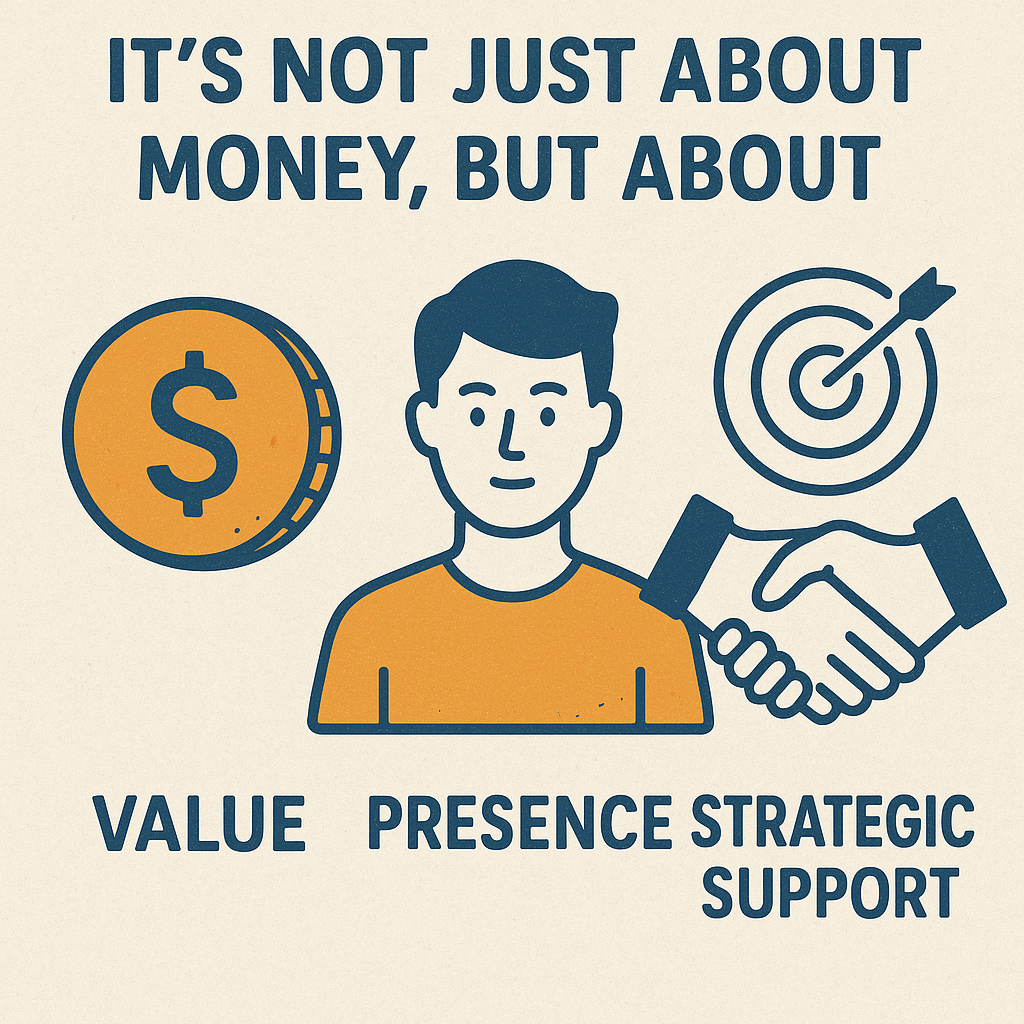
Chapters 4 through 7 of ANGEL by Jason Calacanis continued to inspire and challenge me as an aspiring entrepreneur. In Chapter 4, “Is Angel Investing for You?” the author breaks down what it really takes to be a successful angel investor—money, time, network, and expertise. While you don’t have to have all four, the most effective angels have a combination of them. He says the best angels can (1) write a check, (2) jam out with founders over important issues, (3) provide meaningful introductions to customers and investors, and (4) offer advice that saves founders time, money, and mistakes. This made me think more about how it’s not just about money, but about value, presence, and strategic support.

He also talks about dealing with a wide range of personalities—some brilliant and calculating, others delusional and difficult. And you have to be okay with that. If you’re not comfortable listening to people go on and on about how they’re going to change the world—even if it sounds outlandish at first—then angel investing probably isn’t for you. He talks about “wild cards”—founders who might come off as delusional, narcissistic, or overconfident in the beginning, but who later turn out to be visionaries.That stood out to me because it made me reflect on how people may perceive early entrepreneurs like myself. I often wonder if that’s how people see me now—as a “baby entrepreneur”. I have these big dreams of creating real solutions for real problems in my community and beyond, but since nothing’s launched yet, I sometimes wonder if others see me as a “wild card” or even a little delusional. But like Jason said, those same people are later called “visionaries” once they make it. So I’m holding on to that. I might be seen as overly optimistic now, but I know what I’m building has value—and when it all comes together, the narrative will change.

In Chapter 5, “Do You Need to Be in Silicon Valley to Be a Great Angel Investor?” the answer was simply “yes,” and that simplicity made a bold point. Then Chapter 6, “What’s So Special About Silicon Valley?” builds on that by painting the Bay Area as the center of innovation—not just for startups, but for media, transportation, health, advertising, and more. He says, “The Bay Area is the center of the world—it’s not even up for discussion.” When I read that, it hit me just how influential that small part of Northern California really is. 30% of all venture capital money in the U.S. flows into the Bay Area—more than Boston, New York, and Los Angeles combined. That’s kind of crazy to think about. It definitely shows the power of putting yourself in the right environment. The author talks about how some not-so-smart people got rich quickly in the Bay, while many intelligent people struggled in other cities.

That made me think a lot. I’ve always wanted to travel and explore opportunities beyond North Carolina. Reading this felt like confirmation that, as someone interested in tech and app development, I need to expand my reach and network—especially if I want to eventually connect with angel investors who can help me grow. Location really can impact your access to resources and exposure. That said, I also believe in the power of starting small and growing sustainably. Even if I’m not in Silicon Valley yet, I can still make a major impact here in Greensboro, North Carolina.

I want my app to be something that creates real change locally before I expand globally. It’s about sustainability just as much as scalability. Yes, I want to build something that one day reaches people all around the world, but if I can help even just one person here in my community, that’s already a success in my eyes. The author said he’d rather see a founder fail at a big goal than succeed at a small one. But to me, it depends on what “small” means. Making a difference in even one life is big. My goal is to serve my community well and build something meaningful first—then scale when the time is right. 

Finally, Chapter 7, “Startup Funding Rounds Explained,” lays out the different types of startup funding: sweat equity, bootstrapping, friends and family, incubators, angel/seed funding, bridge rounds, and then Series A through F. One point he emphasized is how investors want to see that you’ve already invested in yourself. That means time, effort, passion, and yes, your own money. They want to know that you’re serious about your business and that you’re not just good at asking for money. They also want to see that you’re not disconnected from your product or your customers. That made me reflect on how I’m approaching my own venture. I’m currently developing a demo of my app and working hard behind the scenes to gather data, refine my ideas, and stay connected to my “why.” I want to be capital-efficient and intentional. I don’t want to take advantage of friends and family either—I want to show that I’ve done the work, that I’m prepared, and that I know where I’m going. Before anyone else invests in me, I want them to see how much I’ve already invested in myself.

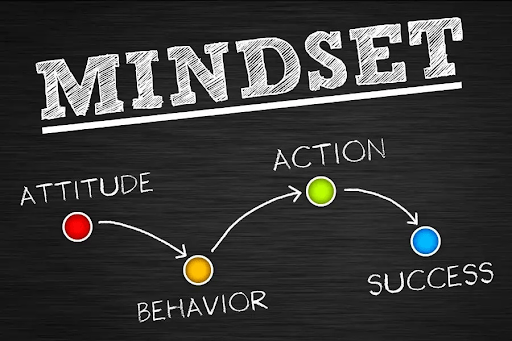
These chapters reminded me that while success in the startup world may seem far away at times, the right mindset, consistency, and faith will carry me there. I’m learning to be the one who believes first, so that others will eventually follow. And with that belief, comes action—strategic, focused, and persistent action that will make my vision real.

Take a look at this article:

“Financing the Next Silicon Valley” by Darian M. Ibrahim. Published in the 2010 Washington University Law Review.

The article explores why efforts to replicate Silicon Valley’s high-tech success often falter in other regions. The author argues that a significant barrier is the lack of local financing for startups, which prompts talented entrepreneurs to relocate to established tech hubs like Silicon Valley.

The article compares three primary sources of entrepreneurial finance:

  1. Private Venture Capital: While influential, it’s typically concentrated in established tech regions.
  2. State-Sponsored Venture Capital: Government-led initiatives often face challenges in effectively identifying and nurturing high-potential startups.
  3. Angel Investor Groups: Ibrahim highlights these as particularly advantageous for non-tech regions. Angel groups not only provide capital but also mentorship and networking opportunities, making them well-suited to support local innovation.

Furthermore, the article examines how securities laws might impede the optimal functioning of angel groups, suggesting that regulatory reforms could enhance their effectiveness in fostering regional entrepreneurial ecosystems.

In essence, the author advocates for strengthening local angel investment networks and addressing legal barriers to create fertile grounds for innovation outside traditional tech centers.

ANGEL 1-3: Walk Boldly in Faith, Embrace Risks, and Keep Building What I’ve Been Called To Do

The first three chapters of ANGEL by Jason Calacanis were insightful and motivating—especially for someone like me, a budding entrepreneur just beginning to develop her ideas and build a foundation for the future. In Chapter One, “Someone Else Was Supposed to Write This Book,” Calacanis introduces the book by placing his story and knowledge in the larger context of the American dream, the changing job market, and the urgency of escaping the “matrix.” He explains that the world is shifting, and we need to be ready for the changes ahead. What I really appreciated was how he framed this book as a way to teach readers not only how to survive the changes that are bound to come, but how to ride them out on top. That mindset alone is empowering. He made it clear—if he could do it, then I can too, with hard work and proper knowledge. That lit a fire in me, and from the start, I felt encouraged and hungry to learn more.

In Chapter Two, “The Brooklyn Grinder,” Calacanis breaks down the idea of risk in investing and entrepreneurship. He asks, “Is angel investing gambling?” and follows with stories that show how angel investing is really about taking informed risks, betting on people and ideas before they’re fully proven. He talks about his journey in the Sequoia Scout Program and taking a chance that ultimately paid off. His words—“No gamble, no future”—stood out to me. In life, and especially in entrepreneurship, it’s about taking risks and sometimes getting uncomfortable to eventually get comfortable. He also shares how he used to dream about the life he has now and how angel investing changed everything for him. What I found really impactful was the Yoda quote he used: “Pass on what you have learned.” That’s exactly what he’s doing in this book—giving us the knowledge, tools, and mindset to follow a similar path. He wraps the chapter by speaking to “real outsiders,” acknowledging his own privilege as a white male born in New York City and recognizing the systemic challenges faced by marginalized groups in America. That hit home for me. As an African American woman, I often feel like an outsider in spaces like business and investing. But he wrote this book to be a playbook for people like me, to help level the playing field—even if he doesn’t have all the answers. That moment of honesty and empathy made me respect him even more.

Chapter Three, “What is Angel Investing?” helped me better understand the basics of angel investing and what makes angel investors different. They’re the ones who come in early, when a founder is still figuring things out—still searching for product-market fit and probably hasn’t made a single dollar yet. But they take a chance because they see potential. A true “angel” is someone who believes in you and what you’re doing, even if there are no tangible results yet. That’s the kind of support every entrepreneur needs at least once in their life. Reading this made me reflect on where I am right now. I’m still developing my ideas, gathering data, and trying to get things off the ground. But this chapter reminded me that before anyone else sees the vision, I have to. I need to be the one who sees all the ways my business can go right. I need to be my biggest fan, because when people see how much I believe in it and invest in it, they’ll want to believe too.

The “no risk, no reward” theme carried through this chapter as well. The author even shared how he invested in Uber early, before it was obvious whether the company could scale or even make money. But he believed in the founder and personally loved the product. That reminded me that angel investing is not just about the business, but about the person behind the business. That’s encouraging because I want to be someone who others see as worth betting on—not just because of my idea, but because of who I am and what I bring to the table.

Lastly, Calacanis touches on the difference between angel investing and “boring,” safe investing like low-fee index funds. He explains that the life of an angel investor—and also an entrepreneur—can change dramatically if you’re willing to “suspend fear, squint a little, and focus not just on what could go wrong, but what could go right.” That stuck with me. Yes, it’s important to prepare and plan, but it’s even more important to focus on the solution you’re creating and the impact it could make. That’s what I want to hold on to as I continue building my business ideas.

These first three chapters reminded me that I have what it takes. They pushed me to dream bigger, believe more, and act boldly. This book is not just teaching me about angel investing—it’s reminding me that the future belongs to those who are willing to bet on themselves and take the first step.

I even came across a platform called Angel Investment Network, which allows entrepreneurs to pitch ideas and connect with potential investors. I hope sharing this resource can be helpful to someone else who might relate to my journey or is looking for new ways to gain traction and visibility.

How to Market an App Like EmpowerMe: A Faith-Based Ed-Tech Revolution

In today’s rapidly evolving digital landscape, the intersection of education and technology presents unique opportunities to empower individuals, especially the youth. Apps like EmpowerMe, which offer a blend of life skills education with gamification and faith-based principles, are transforming the way we approach learning. But how do you market an app that aims to provide both educational content, gamification, and spiritual growth? Here are key strategies to effectively market an app like EmpowerMe, ensuring it reaches those who will benefit the most.

1. Identify Your Target Audience

Before launching any marketing campaign, it’s crucial to clearly define your target audience. Identifying your target audience ensures you tailor your messaging, imagery, and campaigns to resonate with their specific needs and desires.

2. Leverage the Power of Social Media

Social media is one of the most powerful tools for marketing an app like EmpowerMe. Platforms like Instagram, Facebook, TikTok, and YouTube offer tremendous opportunities to connect with our audience.

3. Create Compelling Educational Content

Content marketing plays a crucial role in building trust and credibility. With a faith-based app, content can be used to show how our platform is unique and aligned with our target audience’s values.

4. Highlight the Faith-Based Elements

What sets EmpowerMe apart from traditional educational apps is its faith-based approach. This unique element should be front and center in our marketing efforts.

5. Offer Free Trials and Incentives

Offering a free trial is a great way to let users experience the value of EmpowerMe firsthand.

6. Collaborate with Faith-Based Influencers and Organizations

Collaborating with individuals and organizations who share EmpowerMe’s values can help amplify our app’s reach. 

7. Utilize Paid Advertising for Targeted Reach

Paid advertising, especially through Google Ads, Facebook Ads, and Instagram Ads, can help us reach a highly targeted audience. 

8. Collect and Act on User Feedback

User feedback is invaluable when it comes to improving our marketing strategies. Regularly ask your users for reviews, suggestions, and testimonials to better understand their needs and pain points. 

Marketing an app like EmpowerMe, which blends faith, gamification, and education, is all about reaching your audience in a meaningful way. By using a combination of content marketing, social media, collaborations with like-minded influencers and organizations, and strategic advertising, we can effectively grow the app’s user base. The key is to stay true to EmpowerMe’s mission: to equip individuals of all ages with the practical tools and knowledge needed to thrive in an ever-changing world. By fostering confidence, independence, and empowerment, our mission is to prepare people for the world not only as it is today but for the challenges and opportunities of tomorrow. 

“Greatest Marketing Campaigns” Analysis – Out of Home ☀️

Out-of-home advertising turns everyday spaces into storytelling platforms. From towering billboards and transit posters to eye-catching installations, outdoor ads capture attention in the real world—where people live, move, and make decisions. In this post, we’ll explore award-winning out of home campaigns, breaking down how they creatively use space, visuals, and messaging to connect with audiences on the go. Let’s dive into how the streets, walls, and sky become canvases for bold marketing and lasting impressions.

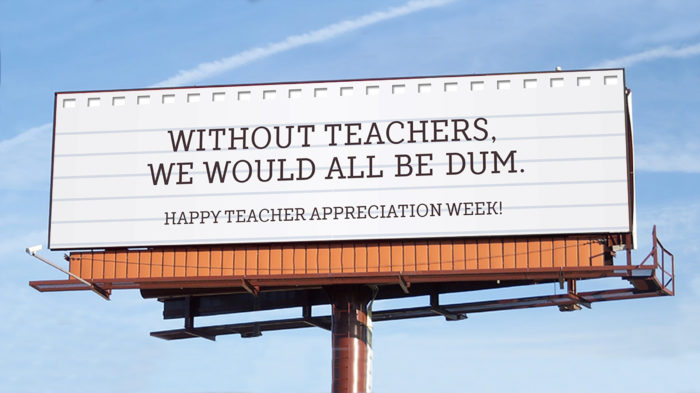
  1. “Without Teachers” – Adams + Fairway 2017 (https://aef.com/ad-campaigns/without-teachers/)

Description: This out-of-home ad is a large billboard designed to resemble a sheet of classic lined notebook paper. The deliberate misspelling of “dumb” as “dum” immediately grabs attention and cleverly emphasizes the importance of teachers in helping us learn—even how to spell. Beneath the main line, a warm and appreciative message reads: “Happy Teacher Appreciation Week!” This ad’s simplicity and visual familiarity evokes nostalgia and drives home the campaign’s message through irony and gentle humor.

Objective: This out of home ad aims to honor and uplift educators during Teacher Appreciation Week by highlighting just how vital their role is in our development. Instead of taking a traditional thank-you route, this ad uses humor and an intentional error to illustrate what life might look like without teachers. The goal is to generate public recognition and stronger appreciation for teachers.

Target Market: This ad targets the general public—students, parents, educators, and community members—essentially anyone who has ever benefited from a teacher’s guidance. It appeals especially to people who may overlook the daily contributions of teachers, reminding them through a playful, relatable concept. By placing this message on a highly visible billboard, this out of home ad ensures maximum reach and emotional impact, especially during a week dedicated to teacher gratitude.

Call to Action: The billboard acts as a social prompt. The misspelling is designed to spark reflection and conversation—encouraging viewers to recognize how much we owe to educators. It also serves as an invitation to act and show more support for our beloved teachers.

Value Proposition: This out of home ad distills a big truth into one small, intentional “mistake.” It shows that without teachers, even the basics—like spelling—fall apart. The clever wordplay makes the message memorable and emotionally effective. It reminds the public that teachers are not just part of the system—they’re the foundation of learning. By invoking both humor and gratitude, the campaign positions teachers as heroes who help shape the minds of every generation.

2. “Feel the Burn?” – AIDS Healthcare Foundation 2017 (https://aef.com/ad-campaigns/feel-the-burn/)

Description: This bold and minimalist out-of-home ad features a solid blue background with the phrase: “FeeltheBurn?” Right below it, is the URL: FreeSTDcheck.org. The design is simple—no images, no clutter—just attention-grabbing text with an urgent question that doubles as a warning. The phrase references one of the symptoms commonly associated with sexually transmitted diseases (STDs), such as burning during urination. This out of home ad campaign includes three formats: a large highway billboard visible to drivers, a bus stop bench ad, ensuring visibility in high foot-traffic areas, and a transit poster on a wall, targeting public transportation users directly.

Objective: This out of home campaign’s main objective is to promote STD awareness and testing by using provocative language and public visibility to spark curiosity, concern, and ultimately action. The ambiguous phrase “feel the burn?” is designed to make people do a double take and reframe their assumptions. The ad confronts the viewer with a possible health risk—then immediately offers a resource to take action: FreeSTDcheck.org. The goal is to destigmatize STD testing and make it feel accessible and important.

Target Market: This ad is aimed at sexually active individuals, especially young adults, teens, and those in urban areas who regularly encounter public advertising on commutes or during daily routines. The use of informal language makes it also appealing to underserved populations who may not regularly visit doctors for routine sexual health screenings or be as knowledgeable about symptoms. The placement of the ads in public transportation zones and on roadways also ensures high visibility among people who may not otherwise engage with digital health campaigns.

Call to Action: The call to action is both direct and subtle. Rather than saying “Get tested!” straight up-front, the ad poses a relatable question and subtly provides a solution: FreeSTDcheck.org. The site URL serves as both the resource and the nudge to act. It invites the viewer to self-reflect and follow up with an easy, private step toward sexual health. This out of home ad’s simplicity and lack of shame-inducing imagery makes it feel more like a public service resource to help people stay healthy.

Value Proposition: This out of home ad stands out because it blends a provocative question with public health messaging, delivering awareness with minimalism and cleverness. Its value lies in its ability to normalize the conversation around STDs and drive people to an accessible and potentially life-saving solution. This ad manages to do all of this with just two lines of text and a simple design. Ultimately, it positions STD testing as normal, responsible, and nothing to be embarrassed about, breaking down stigma through strategic visibility.

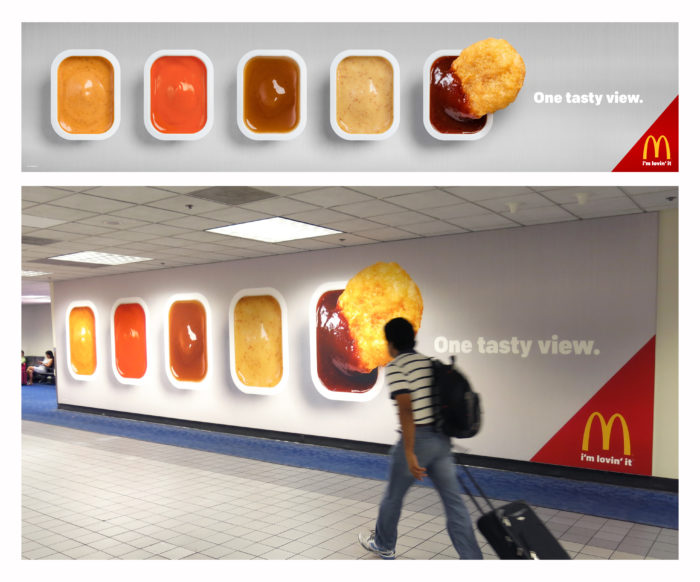
3. “One Tasty View” – Moroch and Sly Fox 2017 (https://aef.com/ad-campaigns/one-tasty-view/)

Description: This out of home ad is a large transit poster that shows five McDonald’s dipping sauces lined up against a white background. In the first sauce container of barbecue sauce, a single Chicken McNugget is being dipped in. Beside the sauces, it says “one tasty view” in simple text. The layout is clean, minimal, and eye-catching, especially in a busy setting like an airport or transit terminal.

Objective: The main objective of this out of home ad is to make people think about McDonald’s food—specifically nuggets and sauces—in a fun and appealing way. Instead of showing a full meal or using traditional slogans, it uses a familiar image to create a craving. The placement in an airport or transit terminal further emphasizes the idea that McDonald’s is travel-friendly, comforting, and accessible—even when you’re on the go.

Target Market: This ad speaks to travelers, commuters, and everyday McDonald’s fans. It’s designed to catch the attention of people passing through public spaces who might be hungry or looking for something familiar and easy. The simplicity of the image works for all ages and backgrounds.

Call to Action: The image of the McDonald’s chicken nugget dipping into sauce makes you think about the food and maybe want to stop for some. Moreover, the phrase “one tasty view” adds a playful twist, making you see food as something worth looking at—and eating.

Value Proposition: This out of home ad shows that McDonald’s is more than just fast food—it’s something comforting and satisfying. The nugget and sauce are small, simple things, but they remind people of what they enjoy about McDonald’s. It makes the brand feel familiar, fun, and easy to enjoy at any time.

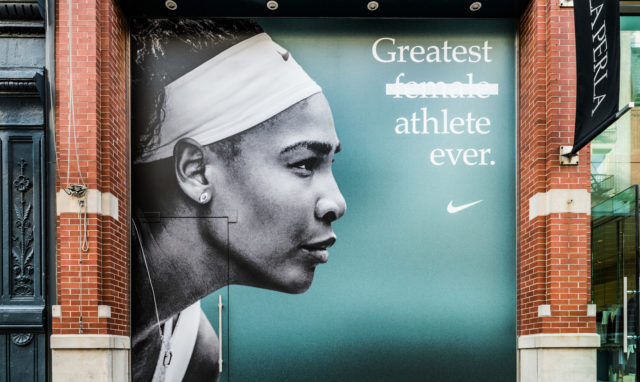
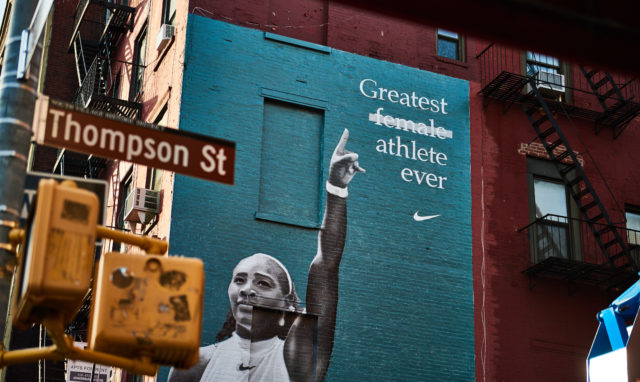
4. “Unlimited Greatness – Serena” – Wieden+Kennedy 2017 (https://aef.com/ad-campaigns/unlimited-greatness-serena/)

Description: These out of home ads feature powerful images of Serena Williams. Beside her, bold white text reads “Greatest female athlete ever,” but the word “female” is crossed out. Only “Greatest athlete ever” remains visible. In the corner, the Nike swoosh logo is placed, keeping the branding minimal yet recognizable.

Objective: This out of home ad’s purpose is to challenge outdated thinking and highlight Serena’s accomplishments not just as a woman, but as an all-time great, period. By crossing out the word “female,” Nike pushes the idea that greatness has no gender qualifier. It’s a celebration of Serena’s impact and a broader message of breaking barriers in sports and beyond. She is presented as the true GOAT.

Target Market: This ad speaks to sports fans, athletes, and especially young people who look up to Serena as a role model. It also targets anyone who values empowerment, equality, and breaking limits. The message goes beyond tennis—it appeals to those who believe in challenging social norms and redefining what greatness looks like.

Call to Action: The crossed-out word itself serves as a bold statement. It invites viewers to think differently, to question how we talk about achievement, and to support athletes who rewrite the rules. It motivates people to see potential without limits.

Value Proposition: Nike reinforces its brand as one that stands for empowerment, equality, and bold messaging. This out of home ad positions Nike not just as a sports brand, but as a leader in cultural conversations. By spotlighting Serena in this way, Nike aligns itself with greatness that inspires beyond the game.

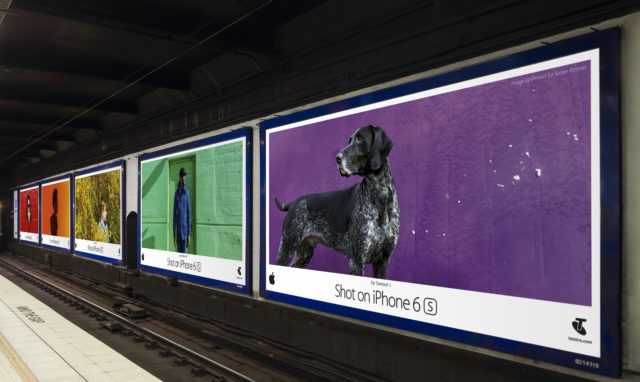
5. “Apple iPhone6” – TBWA\ Media Arts Lab 2017 (https://aef.com/ad-campaigns/apple-iphone6/)

Description: This out of home ad campaign features a series of large, eye-catching billboards and posters in public places like malls and train stations. Each one displays a beautiful, high-quality photograph— one of a dog, a young girl surrounded by flowers, or scenic landscapes. The photos are simple yet striking. On the one with the dog, the text “Shot on iPhone 6s” is included, serving as a subtle reminder that these professional-looking images were taken using just a iPhone camera.

Objective: The main objective of this out of home ad campaign is to showcase the impressive camera capabilities of the new iPhone 6s. By using real images taken by everyday users, Apple aims to highlight the phone’s potential for creativity, quality, and ease of use. The idea is to let the product speak for itself through real-world results, rather than technical jargon or flashy features.

Target Market: The ad is aimed at current and potential smartphone users who value photography and want to capture meaningful moments in high quality. It appeals to creatives, social media users, and everyday people who want great camera quality without needing professional equipment. It’s also directed at brand-loyal Apple customers and those thinking about upgrading their current device.

Call to Action: The message is clear: if you want to take photos this good, you can—with the new iPhone 6s. The ad invites viewers to imagine the possibilities of what they could capture with just their iPhone. It encourages people to see their own world as photo-worthy and to trust the iPhone to capture great photos with high quality.

Value Proposition: Apple positions the new iPhone 6s not just as a phone, but as a powerful creative tool. This out of home ad campaign emphasizes the accessibility of high-quality photography and makes the point that beauty and quality are within reach. It reinforces Apple’s identity as a brand that blends innovation with simplicity and connects with people’s lives in meaningful ways.

Great outdoor ads don’t wait for attention—they demand it. By transforming everyday environments into creative stages, these campaigns prove the power of visibility, simplicity, and bold storytelling in public spaces. Whether you’re a curious viewer or an aspiring marketer, out of home advertising shows us how creativity can live beyond the screen and influence people right where they are. Thanks for exploring with us here on EmpowerMe Life—what’s the most unforgettable billboard or outdoor ad you’ve ever seen?

“Greatest Marketing Campaigns” Analysis – Digital 💻

Digital advertising has transformed the way brands connect with audiences—instantly, interactively, and across every screen. From social media campaigns to banner ads and video content, the best digital ads do more than just sell—they spark engagement, build trust, and often go viral. In this post, we’ll break down standout digital ad campaigns, exploring what makes them effective, how they capture attention in a crowded online space, and the creative strategies behind their success. Let’s dive into the fast-paced world of digital marketing and discover the innovation behind today’s most compelling online ads.

  1. “Hair Hair Everywhere” – Leo Burnett Toronto 2024 (https://winners.webbyawards.com/2024/advertising-media-pr/advertising-campaigns/digital-campaign/281633/hair-hair-everywhere)

Description: This digital campaign by Bounce focuses on a comedic yet relatable issue and it directly engages viewers by placing realistic-looking strands of hair on the screen. The ad simulates the annoying real-life experience of finding stray hair on your clothes or furniture—except this time, it’s digitally placed on your screen, making viewers instinctively try to brush it off, only to realize it’s part of the ad. This prank-style format uses humor, surprise, and a touch of annoyance to effectively demonstrate the problem that Bounce solves: hair and lint that cling to clothes due to static. This digital campaign was executed, using a combination of video, social media content, and targeted online ads to highlight the power of Bounce dryer sheets in combating static cling and keeping clothes (and screens) hair-free.

Objective: This digital campaign’s main objective was to highlight the functional benefit of Bounce dryer sheets—specifically their ability to repel hair, lint, and static cling—in a way that breaks through the clutter of traditional digital ads. Rather than a conventional digital ad, this team created a memorable, shareable experience that people would talk about. It aimed to boost brand recall, product relevance, and engagement, especially in digital spaces where attention spans are short. The creative ad cleverly guides consumers to consider Bounce as their go-to solution.

Target Market: This digital ad is clearly aimed at tech-savvy millennials and Gen Z consumers, particularly those active on social media or viewing content online. It also targets pet owners and style-conscious individuals who value keeping their clothes clean and hair-free. By showing up directly in users’ digital spaces—where they’re most active—the campaign meets the audience where they are, and taps into shared frustrations around cleanliness and presentation.

Call to Action: This digital ad creates naturally leads users to reflect on their own experiences with hair on a screen or clothes and think: “What can I use to stop this?” The implicit call to action is: use Bounce dryer sheets to keep your screens and clothes free of clingy hair. The brand solves the exact discomfort the ad makes you feel—tying the problem and solution together in a single, interactive moment.

Value Proposition: Bounce promises a simple, highly effective solution to the annoyance of hair everywhere. The product offers static control, freshness, and visible cleanliness, making it essential for anyone who cares about appearance or wants to reduce laundry-day frustrations. What sets this digital ad apart is how it transforms a functional feature into a visceral experience. Bounce doesn’t just say it helps remove hair—it makes you feel the problem and immediately connect the dots to their solution.

2. “Run On Heinz” – The Kitchen North America 2024 (https://winners.webbyawards.com/2024/advertising-media-pr/advertising-campaigns/digital-campaign/289238/run-on-heinz)

Description: This digital ad features a woman jogging down a street. But what catches the viewer’s attention is the unusual red ketchup packet tucked into her white sweatband—a humorous and unexpected twist. Accompanying the image are the bold words “Run on Heinz”, styled like a sports slogan. Above it, an icon of a runner holding a ketchup packet mimics traditional sports logos, while the classic “EST. 1869” nods to the brand’s legacy. The visual juxtaposition of fitness and food—specifically ketchup—creates an ironic and memorable impression. This ad blends athletic culture with Heinz’s iconic identity, suggesting that just like athletes run on energy or fuel, this runner “runs on Heinz.”

Objective: This digital campaign aims to create a playful brand association by placing Heinz ketchup into spaces where it traditionally wouldn’t be expected—like fitness culture. Instead of advertising to consumers in the typical context of food or dining, Heinz reaches out through the lens of athleticism and lifestyle branding, aiming to keep the brand top of mind in more dynamic and modern ways. The goal is to show Heinz as not just a condiment, but part of everyday routine and energy.

Target Market: This digital ad is geared toward a younger, active demographic who appreciate humor, irony, and clever branding. It likely targets health-conscious individuals who might not typically think of ketchup as aligning with fitness culture. By placing Heinz in this context, the brand is aiming to rebrand itself as universally relevant—not just for your typical burgers and fries, but as a quirky symbol of personal identity and motivation.

Call to Action: The slogan “Run on Heinz” invites viewers to rethink how Heinz could be a fun part of their everyday hustle. It encourages viewers to associate Heinz with energy, determination, and even individuality. The simplicity and strangeness of the ketchup packet in the woman’s headband makes the ad linger in viewers’ minds, potentially leading them to seek out more about the campaign or brand online.

Value Proposition: Heinz delivers more than just taste—it’s part of a lifestyle. This digital ad emphasizes that Heinz can be your fuel—even in moments where it doesn’t traditionally belong like during runs. The ad’s real value lies in brand differentiation and cultural relevance. It suggests that Heinz isn’t just something you eat—it’s something you “run on”.

3. “Steak-umm Beef Sheets” – Tombras 2023 (https://winners.webbyawards.com/2023/advertising-media-pr/advertising-campaigns/digital-campaign/250165/steakumm-beef-sheets)

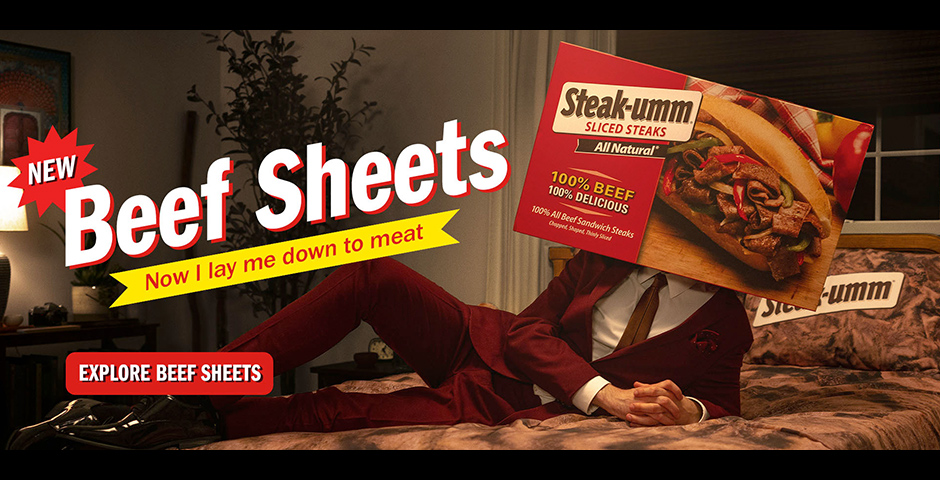
Description: This digital ad campaign by Steak-umm is an absurd, humorous, and intentionally bizarre play on both food and bedtime comfort. This ad shows a person laying in bed with a Steak-umm sliced steaks box as a head, lying atop custom-branded bedsheets featuring the Steak-umm logo, with bold text announcing “New Beef Sheets” and a tagline that reads: “Now I lay me down to meat.” The tone is ridiculous in the best way—using deliberate absurdity, puns, and irony to draw in curious viewers who thrive on memes and weird humor like this. It’s a campaign built to be shared and talked about online.

Objective: This digital campaign’s goal was to generate massive brand awareness through digital virality, not to actually sell beef-themed bedding. Steak-umm has long positioned itself as a brand that leans into internet culture, and this ad follows that tradition. “Beef Sheets” was designed to get attention, spark conversation, and spread across platforms for its weirdness and entertainment value. It succeeds by turning a fake product into a vehicle for content marketing, giving people a reason to engage with Steak-umm even if they aren’t buying it at the moment.

Target Market: This digital ad is clearly aimed at younger internet users—primarily Millennials and Gen Z—who appreciate ironic humor, meme culture, and unexpected content from known brands. It also appeals to niche online communities that love different content, parody ads, and surreal humor like this. Essentially, this is not for the traditional shopper—it’s for the tech-savvy users who would see it and find interest.

Call to Action: This digital ad encourages curiosity and interaction. The real action Steak-umm wants you to take is to laugh, share, and associate their brand with a uniquely weird sense of humor. The more people engage with or talk about the campaign, the more Steak-umm will draw in more customers to buy their sliced steaks.

Value Proposition: While Steak-umm is ultimately a food company, the Beef Sheets campaign reinforces its cultural value: Steak-umm isn’t just about frozen beef—it’s about being part of the internet in a fresh, funny way. The brand offers a memorable experience, whether you’re eating it or engaging with its digital content. Steak-umm positions itself as not only tasty but combines classic comfort food with over-the-top satire.

4. “SurveyMonkey Gives the People What They Want” – PMG 2023 (https://winners.webbyawards.com/2023/advertising-media-pr/advertising-campaigns/digital-campaign/249903/surveymonkey-gives-the-people-what-they-want)

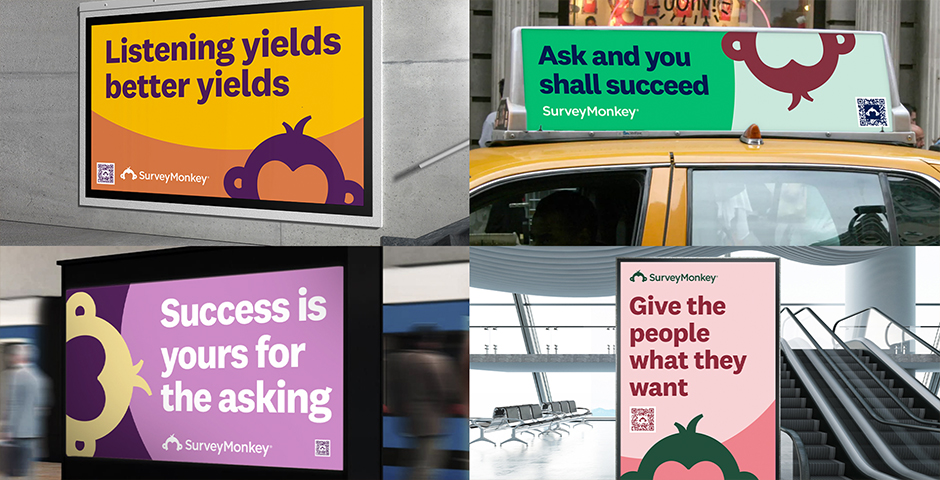
Description: This digital campaign from SurveyMonkey blends bold design and clever wordplay to emphasize the value of asking questions and listening to drive better outcomes. The visuals show a consistent brand identity across various media: billboards, taxi tops, transit ads, and airport displays. Each ad pairs simple, colorful backgrounds with snappy, benefit-driven taglines. The layout prominently features SurveyMonkey’s playful monkey-tail logo and QR codes, creating a lighthearted but strategic visual identity.

Objective: The main goal of this campaign was to reposition SurveyMonkey as more than just a simple survey tool. The campaign aimed to establish it as a powerful business intelligence platform that helps organizations listen, understand, and take informed action based on feedback. By connecting the act of “asking” to tangible results like “success” and “better yields,” it reframes surveys as drivers of strategy, not just data collectors.

Target Market: This digital campaign speaks to business professionals, decision-makers, organizations, and more. The language and placements also make it accessible to a broader public who may not realize how much SurveyMonkey can impact business success. It appeals to people who believe in data-driven insights but want tools that feel approachable and easy to use.

Call to Action: Each ad includes a QR code, inviting people to learn more by scanning. The underlying call to action is to encourage people to use SurveyMonkey to unlock insight and drive success. The phrasing—like “Give the people what they want”—is both a call to action and a brand promise. It encourages businesses to ask questions, listen well, and act wisely, and it positions SurveyMonkey as the best platform to make that happen.

Value Proposition: SurveyMonkey is offering more than surveys—it’s offering insight, clarity, and business impact. The campaign’s message is that when you ask the right questions and genuinely listen to feedback, you don’t just learn—you succeed. The relatable language and bold visual branding communicate that SurveyMonkey helps businesses thrive by turning voices into value. It’s user-friendly, effective, and adaptable across industries.

5. “Samsung iTest – Test drive a Samsung on your iPhone” – Tribal/DDB New Zealand 2022 (https://winners.webbyawards.com/2022/advertising-media-pr/advertising-campaigns/digital-campaign/219977/samsung-itest–test-drive-a-samsung-on-your-iphone)

Description: This digital campaign is of a Samsung iTest that invites iPhone users to try out a Galaxy device experience directly on their iPhone. The campaign delivers a fully interactive web-based simulator that mimics the Samsung Galaxy UI—complete with mock apps, settings, messages, and a humorous tone that pokes fun at the Apple/Samsung rivalry. Rather than boast features in a commercial, Samsung hands over the interface and lets people explore. It’s bold, unexpected, and deeply engaging.

Objective: The main objective of this digital ad is to reduce iPhone users’ resistance to switching to Android by letting them test drive a Samsung experience risk-free —no downloads, no devices, no pressure. The goal is to spark curiosity and plant the idea of switching, especially among hesitant Apple users who’ve never used a Samsung device.

Target Market: The digital campaign targets iPhone users, particularly those who are curious, tech-savvy, and open-minded, but hesitant to switch phones. It appeals to younger audiences, including Gen Z and millennials, who value hands-on experience and playful innovation. By making the experience accessible and easy to explore, it lowers the barrier to entry for potential switchers who have never used Android but may be curious about Samsung.

Call to Action: It’s a soft, interactive call to action that doesn’t push a sale, but instead encourages experimentation. Samsung opens the door for organic reconsideration, which is more powerful than direct persuasion in this case. No pressure—just explore, enjoy, and get a feel for Samsung.

Value Proposition: Samsung positions itself as the more flexible, user-friendly, and playful alternative to Apple. The value here isn’t just about features—it’s about accessibility, confidence, and choice. The iTest campaign reframes Samsung as approachable and innovative, winning users not with pressure, but with clever, immersive engagement.

Great digital ads do more than reach a screen—they reach people. Through creativity, data-driven strategy, and emotional relevance, these campaigns show how digital platforms can be used to tell powerful stories and drive meaningful action. By analyzing these award-winning examples, we gain insight into what it takes to stand out in the ever-evolving digital landscape. Whether you’re a content creator, marketer, or just someone who scrolls with intention, these ads remind us of the power of connection in a digital world. Keep following EmpowerMe Life for more insights on media, marketing, and the life skills that make us all better communicators—and tell us, what’s the most impactful digital ad you’ve seen lately?
“Greatest Marketing Campaigns” Analysis – Print 📰

Print advertising may be traditional, but it’s far from outdated. With its bold visuals, concise copy, and strategic placement, print advertising has a unique way of grabbing attention and delivering powerful messages—often in a single glance. In this post, we’ll explore award-winning newsprint ads, breaking down what makes them effective, how they appeal to readers, and the marketing techniques that make them stand out. Let’s dive into the timeless art of print advertising.

  1. “Lego”– Lowe Bull – Johannesburg 2007 (https://aef.com/ad-campaigns/lego/)

Description: This AXE Body Spray print ad uses humor and visual exaggeration to appeal to young male audiences. This ad presents a man standing proudly next to a life-sized LEGO statue of an Egyptian figure, with the implication that he has spent several hours building it. Above this image are three smaller visuals: a bottle of AXE body spray, then a man spraying himself generously with it, and that same man now standing between two women, with his arms around both of them. This visual, paired with the bold headline “Get a Girlfriend,” relies on humor and irony to suggest that while building LEGO statues might not get you a date, using AXE Body Spray will.

Objective: The main objective of this campaign is to promote AXE as a tool for transforming a youn man’s self-perception and social life. It aims to increase product sales by positioning AXE not just as a body spray, but as a confidence booster that can lead to improved social interactions—particularly with women. While this ad’s scenario is intentionally a little extra, it’s designed to reinforce the idea that using AXE can have an instant and noticeable effect on attractiveness and masculinity. This campaign’s goal is both measurable (in terms of sales and engagement with the brand) and time-specific. It’s aligned with a broader branding strategy to reposition AXE as a confidence boosting product for young men.

Target Market: This print ad clearly targets teenage boys, young adult men, and men who may be deemed socially awkward or outcasts—those navigating their identity, self-image, and love life. This demographic is often in search of products that enhance confidence and help them either fit in or stand out socially. The ad appeals to their insecurities and aspirations by humorously suggesting that AXE can boost their romantic success. It resonates with youth culture, especially with those who enjoy irony, sarcasm, and media that exaggerate everyday situations for comedic effect.

Call to Action: This print ad encourages the audience to buy and use AXE body spray. The implied action is that, by doing so, they’ll not only smell good but also become more confident and attractive. The benefit promised is a dramatic improvement in how others, particularly women, perceive them. While clearly satirical, the call to action plays on a man’s desire for transformation and validation, motivating the viewer to give AXE Body Spray a try to potentially experience a shift in their social life.

Value Proposition: AXE offers more than just fragrance—it sells the idea of enhanced self-esteem and appeal. The product is positioned as a simple, accessible tool that can change how young men feel about themselves and how others respond to them. The features of AXE (strong scent, recognizable branding, ease of use) are paired with emotional benefits like increased confidence, romantic appeal, and social recognition. The value lies in the promise that AXE is not just a grooming product but a lifestyle upgrade for those who want to be noticed and admired.

2. “Oh The Shame” – Leo Burnett, Chicago 2007 (https://aef.com/ad-campaigns/oh-the-shame/)

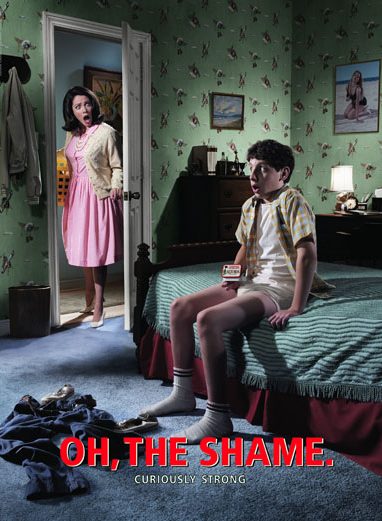
Description: This ALTOIDS print ad features a young boy sitting on the side of his bed in his underwear, holding a tin of ALTOIDS mints on his lap. His pants are on the floor, and his mouth is open in surprise or shock. At the door stands his mother, equally shocked, with her mouth open as if she’s caught him in the act of doing something he shouldn’t. This ad, with the caption “Oh the shame. Curiously strong,” plays on the concept of an uncomfortable, embarrassing situation—yet the boy’s only offense is holding a tin of ALTOIDS mints. The scene creates a suggestive implication, hinting that something different is happening, only for the punchline to reveal that it’s just a strong breath mint. This clever misdirection enhances the humor and draws attention to the “curiously strong” nature of the ALTOIDS mints in an unexpected, playful way.

Objective: The main objective of this ad is to emphasize the strong, boldness of ALTOIDS mints. This ad’s humor relies on exaggeration and the surprise factor of a seemingly embarrassing situation, only for the resolution to be that the boy is simply holding ALTOIDS mints. By using this suggestive approach, the ad highlights the product’s strength in a memorable and engaging way. The campaign’s goal is to attract attention in a humorous and intriguing way, making ALTOIDS stand out in the crowded mint market. The objective is measurable through brand awareness, as the ad’s quirky and slightly suggestive humor is likely to stick in viewers’ minds, driving both curiosity and product sales.

Target Market: The target audience for this ad includes teens and young adults, particularly males who understand and those who appreciate offbeat humor in their advertisements. This ad plays into a cultural love for ironic, suggestive comedy, and it is likely to resonate with a demographic that enjoys ads that don’t take themselves too seriously. These are also people who are looking for something different in their breath mints—something bold, with a strong flavor and personality.

Call to Action: The call to action is clear: try ALTOIDS and experience their “curiously strong” effect for yourself. The shocking and suggestive nature of the ad creates curiosity—viewers might wonder if the mints are truly as intense as the situation suggests. If the audience purchases ALTOIDS, they’re promised an unforgettable, bold breath-freshening experience that goes beyond typical mint offerings.

Value Proposition: ALTOIDS mints are marketed as “curiously strong,” and the ad drives this point home by making the mints the focal point of an exaggerated scenario. The value proposition isn’t just about breath-freshening; it’s about offering something powerful, distinctive, and unforgettable. The “curiously strong” phrase makes the mints stand apart from competitors. This print ad reinforces that ALTOIDS isn’t just a mint; it’s a memorable product that doesn’t shy away from being strong in both flavor and marketing.

3. “Aquarium” – DDB Paris 2007 (https://aef.com/ad-campaigns/aquarium/)

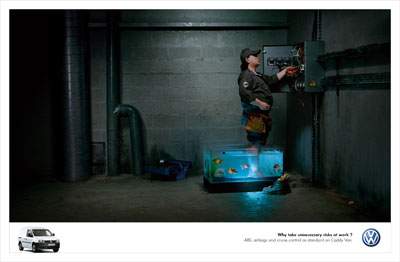
Description: This print ad for Volkswagen Commercial Vehicles features a striking and ironic image: an electrician working on a live breaker box while standing barefoot in a full fish tank aquarium. His work boots are placed right outside the tank, emphasizing the absurdity of his situation. This ad is comical but carries an underlying tone of danger. In the bottom right corner, a caption reads, “Why take unnecessary risks at work?” followed by the Volkswagen logo. Below that, the ad notes, “ABS, airbags, and cruise control as standard on Caddy Van,” accompanied by an image of the Caddy Van in the bottom left corner. The appeal here is a mix of humor and subtle danger—this print ad uses exaggeration to make a serious point about workplace safety and how unnecessary risks can be avoided by making smart choices, like driving a well-equipped, safe vehicle.

Objective: This ad’s main objective is to promote Volkswagen and the Caddy Van by highlighting its built-in safety features—ABS, airbags, and cruise control—as standard. This ad communicates the idea that choosing the right vehicle is just as important to safety as avoiding obvious workplace hazards. It aims to position Volkswagen’s Caddy Van as the smart and secure choice for workers who value safety and reliability. The objective is measurable through an increase in product awareness and preference among trade workers, like electricians, who may be evaluating their next commercial vehicle purchase.

Target Market: The target market for this ad includes electricians, plumbers, handymen, contractors, and other tradespeople who use commercial vans in their day-to-day work. It’s also directed at other businesses who purchase vehicles for employee use. These are practical, safety-conscious individuals who value efficiency, performance, and durability—but also appreciate clever, relatable advertising that speaks their language.

Call to Action: This ad’s messaging encourages viewers to reevaluate their current work vehicle’s safety features and consider upgrading to a Volkswagen Caddy Van. The benefit it offers is peace of mind—driving a vehicle that supports your work without compromising your safety. It suggests that, just like avoiding barefoot electrical work in an aquarium, choosing the right vehicle is a crucial step in avoiding unnecessary risks on the job.

Value Proposition: Volkswagen offers safety, reliability, and practicality as the core value of its Caddy Van. With features like ABS, airbags, and cruise control included as standard, the van provides a comprehensive safety package designed specifically for working professionals. This ad reinforces the message that Volkswagen understands the everyday realities of its customers and delivers thoughtful design and engineering to help them stay safe while getting the job done. The humorous visual reinforces the idea that while some risks are absurdly obvious, others—like driving an unsafe vehicle—may be overlooked unless you’re reminded of this smarter choice.

4. “Music” – Saatchi & Saatchi, New York 2007 (https://aef.com/ad-campaigns/music-2/)

Description: This print ad for Glide Dental Floss uses a clever visual metaphor to highlight the effectiveness of its product. The focal point is a large, bold white word—”MUSIC”—spread across the image similar to a clean row of teeth. Wedged tightly and awkwardly between the letters “M” and “U” is the phrase “boy bands” in a much smaller, bright yellow font. This placement mimics the familiar and uncomfortable sight of food particles stuck between teeth. In the bottom right corner, there’s a small image of a Glide dental floss container, subtly but strategically placed to suggest a solution to the problem. The visual is simple but witty, using an everyday annoyance (stuff stuck in your teeth) and pairing it with a culturally humorous reference (boy bands) to evoke a lighthearted emotional response.

Objective: The main objective of this ad is to convey how effective Glide dental floss is at removing things stuck between teeth—quickly, cleanly, and with ease. Rather than using a traditional ad narrative, the image itself acts as the punchline, relying on a clean, unique design to demonstrate the product’s benefit through metaphor. It seeks to build brand recognition and reinforce Glide’s unique selling point: that it gets into tight spaces and removes the “gunk” that doesn’t belong. This campaign doesn’t push an immediate sale but rather creates a memorable visual connection with the brand.

Target Market: This ad targets adults and possibly teens who are visually inclined and appreciate smart, humorous advertising. It’s likely aimed at a modern, pop culture-aware audience who would catch the joke about “boy bands” being unwanted or cheesy—just like food debris. Additionally, the minimalistic and clean aesthetic of the ad could appeal to health-conscious consumers who care about oral hygiene and want a high-quality product that works.

Call to Action: The call to action is noticeable: if you’ve got things stuck in your teeth, Glide dental floss is the solution. The cleverly placed phrase “boy bands” stands in as a metaphor for all the unwanted food and debris that might get trapped between your teeth—and by association, Glide is the product to remove them.

Value Proposition: Glide Dental Floss offers a superior flossing experience by effortlessly removing debris—even from tight spaces—while being gentle and smooth. This print ad promises effective cleaning without struggle or discomfort. By visualizing teeth as blocky letters and “boy bands” as the debris and lodged food, it reinforces the idea that Glide can remove it, leaving your mouth cleaner and fresher. The product stands out for its simplicity and smart branding that connects hygiene with humor.

5. “Ballprints by Tevez” – BBDO Argentina, Buenos Aires 2007 (https://aef.com/ad-campaigns/ballprints-by-tevez/)

Description: This Nike print ad features what first appears to be a chaotic mess of muddy soccer ball marks across a white canvas. However, upon a closer look, the ballprints are specifically arranged to form a portrait of soccer star Carlos Tevez, cleverly shaped through repeated impressions made by a muddy soccer ball. In the bottom right corner, the phrase “Tevez by Tevez” appears, emphasizing the idea that the portrait was created not by a typical artist, but by Tevez himself—through his soccer skills and intense play. This ad uses clever visual metaphor and artistry to appeal to emotion, pride, and admiration for Tevez’s identity as a self-made athlete.

Objective: The main objective of this campaign is to celebrate Carlos Tevez’s individuality and skill as a player, while reinforcing Nike’s brand identity as a champion of authentic athleticism. Rather than promoting a particular product, this ad aims to create emotional connection and brand elevation by portraying Tevez as both subject and creator—someone whose dedication and performance on the field are a form of self-expression. It’s about storytelling: showing that greatness leaves a mark—literally and figuratively.

Target Market: This print ad targets young, passionate soccer players and fans, particularly those who admire underdog success stories, authenticity, and strong work ethic. It appeals to people who see sports as more than just competition—it’s an identity and a canvas. The audience is likely inspired by players like Tevez, who didn’t come from privilege but built their legacy with sweat, resilience, and hustle. Globally, it speaks to fans who respect artistry in sport and align themselves with brands that represent it.

Call to Action: The implied message shows appreciation for Tevez and encourages viewers to be the kind of athlete who creates something lasting through the way you play. By positioning Tevez as both the artist and the art, Nike invites the audience to see their own game as a form of self-expression. This ad encourages players to leave their mark, suggesting that Nike supports and enhances that journey.

Value Proposition: This ad shows that with Nike, athletes don’t just perform—they create. The visual of Tevez’s face formed by the muddy ballprints reinforces Nike’s message that true greatness is shaped by hard work and persistence, not necessarily glamour. Nike becomes symbolic of that process—providing the tools athletes need to define themselves and make an impact, both on the field and in the world.

The best print ads prove that less can truly be more. Through thoughtful design, clever headlines, and emotional impact, they manage to tell a story, sell a product, and spark curiosity—all without saying too much. By analyzing these standout campaigns, we gain a deeper appreciation for the creativity and strategy behind effective visual communication. Whether you’re designing your own ad or simply learning to see with a critical eye, these examples remind us that even on paper, marketing can be powerful. Stay connected with EmpowerMe Life for more insights on advertising, media literacy, and life skills—and tell us, what’s the most eye-catching print ad you’ve seen lately?